Have you ever wondered what would you do with a plane if the pilot is knocked unconscious? If no one else is able to fly the plane, your live may depend on a number of important decisions.
Someone can guide you through the radio, but this article will help you to know what to expect and to be a little prepared. These kind of scenarios are common in movies, people who have received training have never landed a big plane in the “real world” but with some basic skills you will know the main controllers of an airplane.
What to do with a plane if the pilot is knocked unconscious:
1. TAKE A SIT
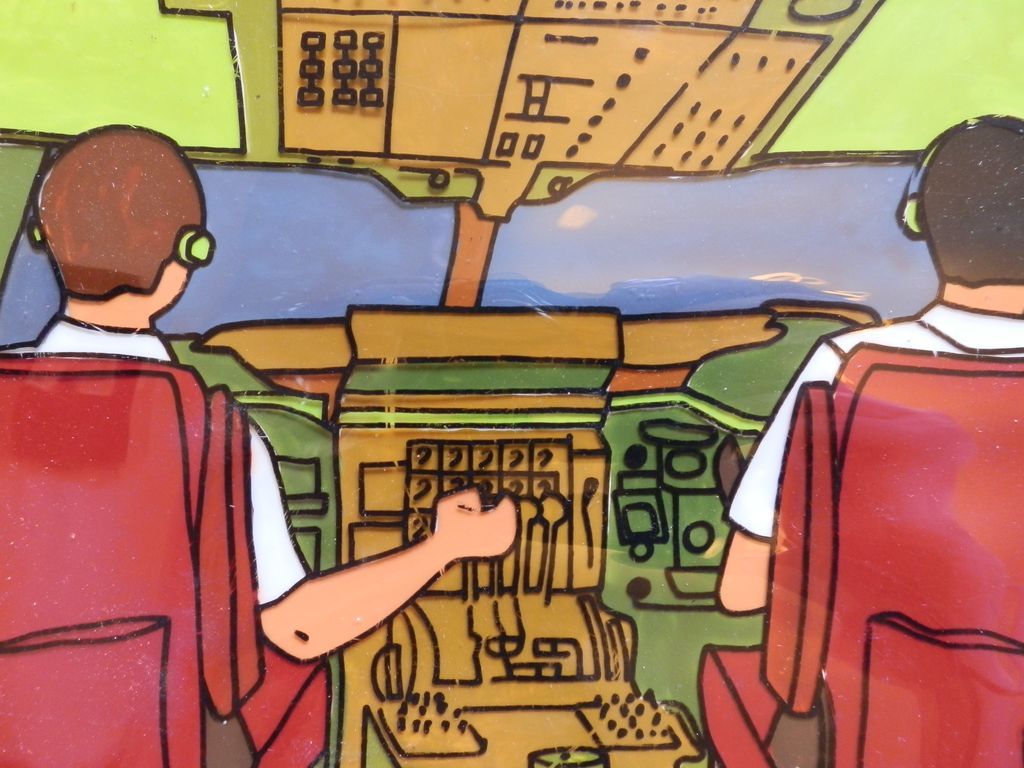
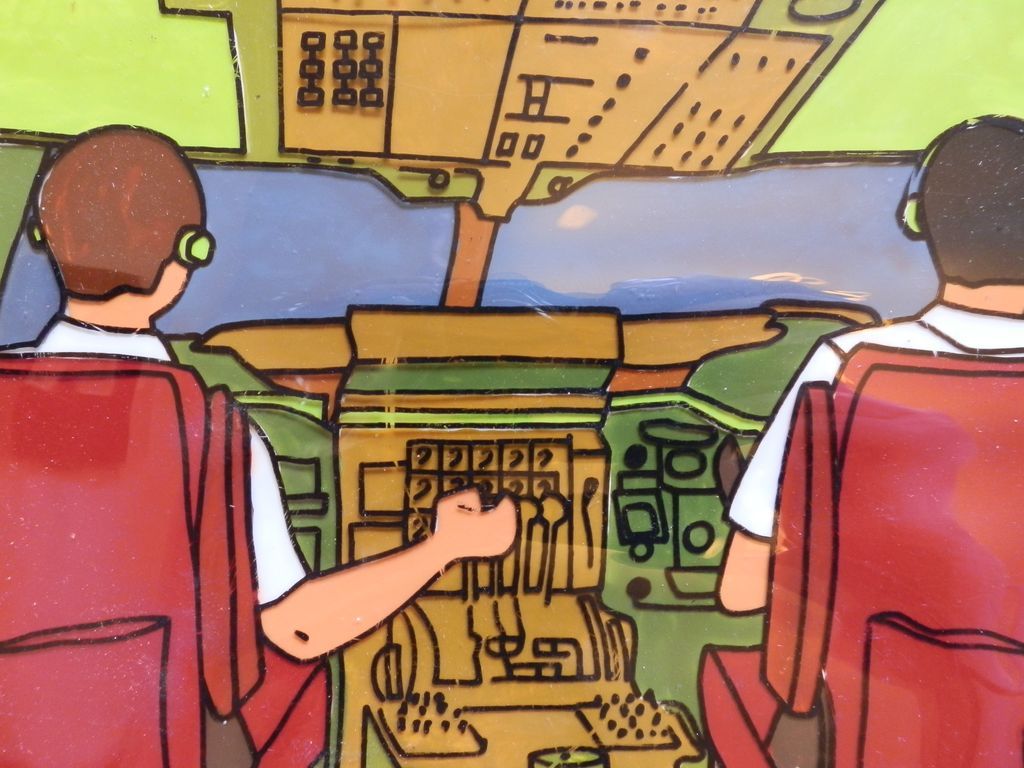
 Usually, the captain sits on the left where the majority of controlls are. Call someone for any help to sit in your right. Fasten your seat belt and shoulder harness (if any). However, almost all the aircraft have dual controls and you can land one successful no matter where you sit. Do not touch the controls!!! Chances are that the autopilot is engaged to be drived automatically. Leave it for now.
Make sure the unconscious pilot is not leaning over the control (the equivalent of driving a car). Some aircraft may have a lateral control, which is a joystick to the left of the captain’s seat.
2. BREATH
 You’ll probably feel overwhelmed with sensory overload and the seriousness of the situation. Breathing will help you focus. Breathe slowly and deeply tell your body and mind that you are in control.
Stabilize the plane. If you feel the plane climbs, descends and turns, slowly stibilize its altitude flight using the outside horizon as a guide. In the end all these days of video games work out today!
Search the attitude indicator. Sometimes known as the artificial horizon, the instrument consists of a miniature set of “wings” and the image of the horizon. The top is blue (representing the sky) and the bottom is brown. In some complex aircraft, the attitude indicator is displayed on a computer screen in front of the pilot. On older aircraft, it is located in the center of the top row of instruments. In modern airlines, there will be a primary flight display right in front of you. This screen displays important information such as airspeed measured in knots ground speed is also measured in knots, altitude and course. It should also show if the autopilot is turned on or not, usually indicated as AP or CMD.
3. STABILIZE THE ELEVATION

Stabilize the elevation (ascent or descent) and the lateral tilt (rotation) if necessary for miniature wings are level with the artificial horizon. If you are already leveled, do not touch the controls at all and proceed with the next step. However, if you need to level the plane, adjust the flight balance pulling the knob (or level) towards to make the front part goes up or push it foward to go down. You can correct the lateral tit (rotation) moving the knob to the left or right to turn into that direction. At the same time, you must apply a little resistance in the knob to avoid the airplane lost altitude.
4. TURN ON THE AUTOMATIC PILOT (AUTOPILOT)
 If you have tried to correct the course of the airplane (driving it), it’s probably that the autopilot has been desactivated. Turn it on pressing the “AUTOPILOT” button or “AUTOMATIC FLIGHT”, “AFS”, “AP” button. In passenger airplanes, this button is located in the center of the antiglare panel where both pilotd can reach it easily. In most flights during the curse, the autopilot is on.
Only if the autopilot cause the airplane to do things that you do not want, turn it off again by pressing all the buttons you can find in the command (which will probably include the button autopilot OFF). Usually, the best way to make a plane fly in a stable way is to not touch the controls. The planes are designed to be stable and most people that are not trained pilots tend to control them incorrectly.
5. ASK FOR HELP BY RADIO

Search for the handheld microphone, which is usually located to the left of the pilot’s seat just below the side window, and use it as a CB radio. Find the microphone and repeat “Mayday” three times followed by a brief description of the emergency ( example: unconsciuous pilot ). Do not forget to release the button to hear the answer. A flight controller guy will help you to flight the airplane and land safely. Listen carefully and answer their questions as best so they can help you effectively.
You can also take the pilot headphones and press the button to talk (PPT), wich is in the control. However, the autopilot button is in the same control, if you press by accident, you can disable the system. It is BEST to use the handled radio.
If you see a red light on the panel, tell it to the controller. Under this red light, there will be a description ( example: low voltage, generator ). Obviously, this requires fast attention.
If you can find the transponder on the panel of the radio (it has four windows of 4 numbers from 0 to 7, usually located near the bottom of the panel), set it to 7700. This is an emergency code that will alert quickly the air traffic controllers indicating you have an emergency.
5. USE THE CALL SIGN OF THE AIRPLANE WHEN YOU TALK TO THE DRIVER
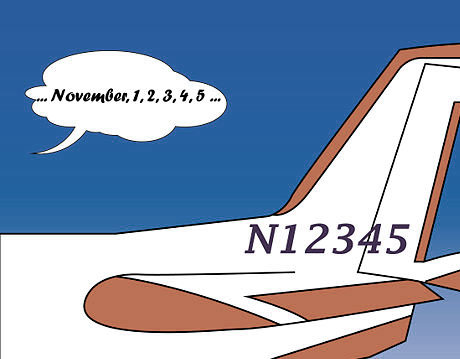
 The call sign of the airplane is on the panel (unfortunately, there ir no standard location, but the call signal must be somwhere in the panel). Ringing tones for registered USA aircraft begins with the letter “N” (example: “N12343” ). This letter can be confused with others on a radio, so say “November”. Announcing the call will identify clearly the airplane and also it will give the flight controllers the important information about the airplane so they can help you land it.
If you are on a commercial flight (one operated by an airline such as UNITED AIRLINES), the airplane is not known for its beginning letter “N”, but for its call sign or for the flight number. Sometimes, pilots put a sticky note on the panel as a reminder. Ask a flight attendat what number is. When you call the Radio, tell first the name of the airline and then the number. If the flight number is 123 and the airline is United Airlines, the flight signal will be “United 1-2-3”. The figures shouldn’t be read as a single number, so do not say “United one hundred twenty three”.
6. MAINTAIN A SAFE SPEED
Search the speedometer (generally indicated as ASI, airspeed or knots), which is usually found in the top left of the instrument panel, and watch your speed. The speed is read either in mph (miles per hour) or knots (whose values are similar). Do not fly a small two-seater plane to less than 70 knots and a big one (Jumbo) less than 180. Basically, just make sure the needle stays in the “green” zone indicator for normal flight until you can receive someone’s help through the radio.
If the airplane speed begins to inrease without you’ve touched the accelerator, there’s a chance you’re going down. If the speed decreases, lower gently the nose to increase it. don´t lt the plane fly too slow, specially if you are near the ground, it could stop and the wings stop producing lift.
7. THE LANDING BEGINS
 The controller which you talk has to facilitate the landing procedures for the aircraft and guide you to a safe place to land. Chances are that you head for the runway at an airport, but in some rare circumstances you may need to land in a field or road. If you have to land and you can not get to an airport, avoid places with power lines, trees or other obstacles.
To reduce the plane’s altitude, pull the throttle (to reduce power) until you hear the sound indicating the change of engine and then stop. It is impossible to generalize, but probably you’ll only have to move ½ cm (1/4 inch). Keep the airspeed within the green margin. The nose should drop by itself without pushing forward command.
 If you are needed to push or pull the remote control to constantly maintain stable the plane, use the compensator to alleviate these pressures. Otherwise, it can be very tiring and distracting. Trim wheel is approximately 15 to 20 cm (6 to 8 inches) in diameter and rotates in the same direction as the wheels of the landing gear. They are often located near your knees on either sides. It is black and has small bumps on the outer edges. While maintaining pressure on the joystick, gently turn the trim wheel. If the pressure you are keeping becomes higher, turn the wheel in the other direction until you no longer have to maintain the original level of pressure. Note: In some small aircraft, wheel balancer can be found in the roof panel and with a crank shape. Also in larger aircraft, this wheel is shaped like a switch on the control button. It is usually found near the top left. If the plane pushes the lever toward you, then push the lever down. If the knob gets away from you, push the lever up.
8. LANDING

You have to use a variety of driving devices (slats and flaps off the accelerator) to slow the airplane without losing elevation. Lower the landing gear if it’s a retractable case. If the train is stationary, always will be down and you dont need to do anything. The landing gear handle (the end is shaped like a tire) is usually found just to the right of the center console above the knee of the co-pilot. However, if you need to land on water, do not lower the landing gear.
Just before landfall, you will need to raise the nose to make the maneuver pickup (flare) and you will have to land first with the main wheels. Usually, raising the nose is about 5 to 7 degrees in a small aircraft while in some larger can reach 15 degrees.
If you’re flying a large commercial jet, activate the reverse thrust, in case the ship counts with one. In a Boeing, there are bars behind the throttle quadrant. Pull them back as far as you can and the thrust will be directed forward to help stop the plane. If all else fails, pull the throttle back as fast and far as possible.
Reduce power to a minimum pulling the throttle toward to you until you reach the “off” signal (idle). The throttle is a black color lever that is usually located between the pilot and copilot.
Apply the brakes gently pressing the top of the rudder pedals. Use the pressure required to stop the aircraft without skating. The rudder pedals are used to drive the plane into the ground, so do not use them unless the plane is off the track.
9. CONGRATULATE YOURSELF!!
Once you’ve gotten help for the unconscious pilot, you can finally pass out. Go ahead, you’ve earned it. And if you can dear to see another plane and even get on one, you may have what it takes to fly and may want to consider the possibility of taking flying lessons from a certified instructor. Although you may be able to do so. You can also write a book about your experience.